Types of knives and handles
Nasal and septum knives
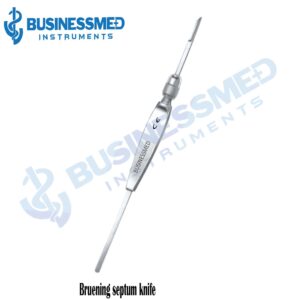
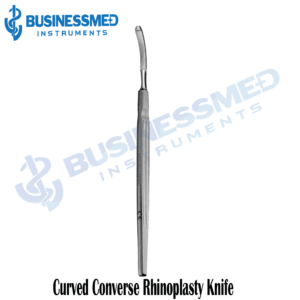
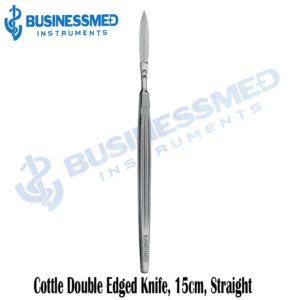
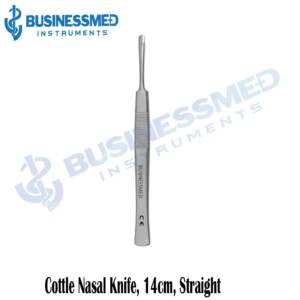
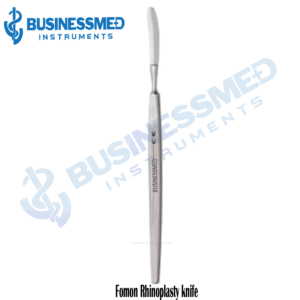
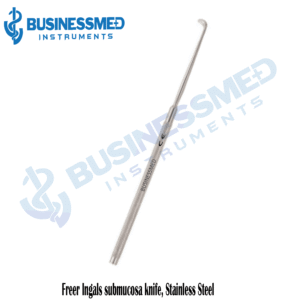
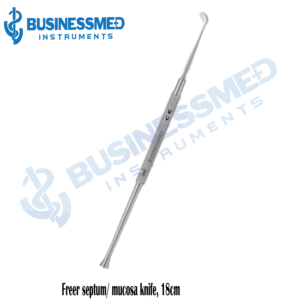
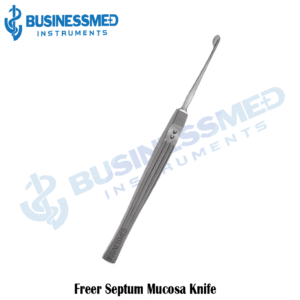
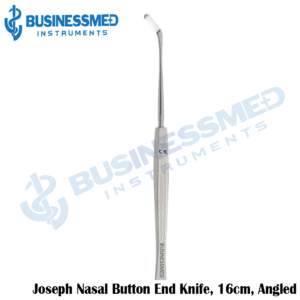
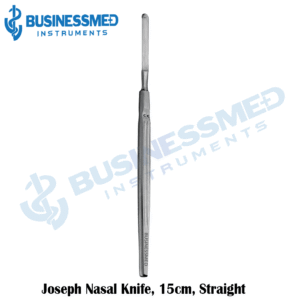
A nasal knife cuts and dissects internal nasal tissue, including the septum: a one-piece instrument with a long slender shaft and a small blade. Cottle, Joseph and Freer knives belong to standard septoplasty and rhinoplasty sets. A Freer septum knife has a small D-shaped or angled blade that follows the submucous plane — see the Freer septum mucosa knife; Joseph button-end knives plane and trim nasal cartilage, the button tip separating mucosa from cartilage (Joseph button end knife). See also the Cottle nasal knife and the curved Converse and Fomon rhinoplasty knives.
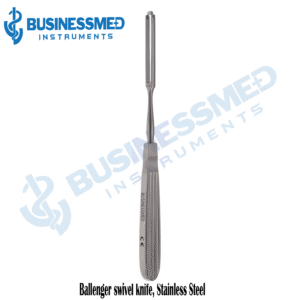
Ballenger swivel knife
In submucous resection the septal cartilage is excised with the Ballenger swivel knife, whose blade swivels between two prongs so the cut follows the push.
Cartilage knives
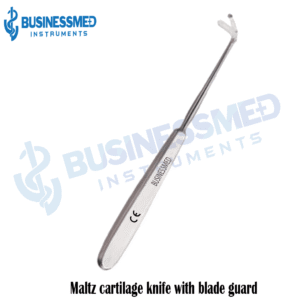
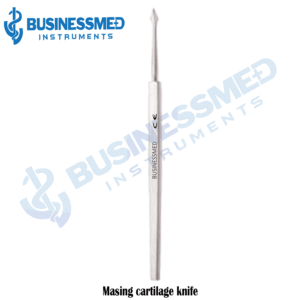
The Masing cartilage knife is a curved slitting knife; the Maltz cartilage knife carries a blade guard for graft shaping.
ENT and microlaryngeal knives
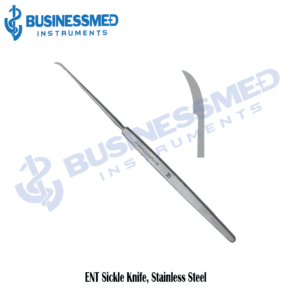
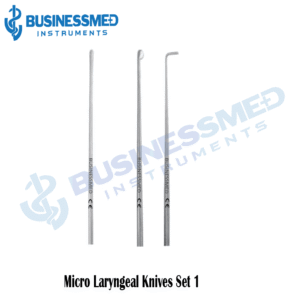
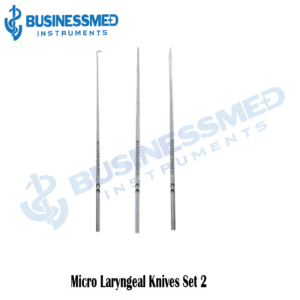
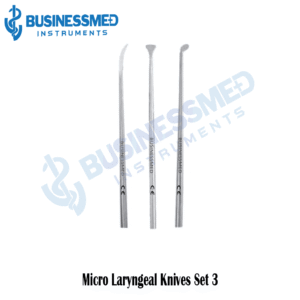
A sickle knife is used for uncinectomy in endoscopic sinus surgery — see the ENT sickle knife. Microlaryngeal knives have long slender shafts that reach the larynx through a laryngoscope for vocal-fold incisions and microflap dissection (micro laryngeal knives set). The Halle brain knife is a neurosurgical knife.
Scalpel handles and blades
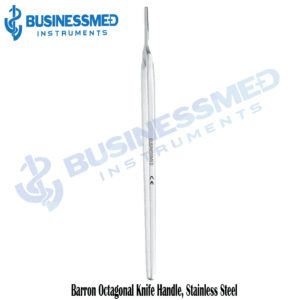
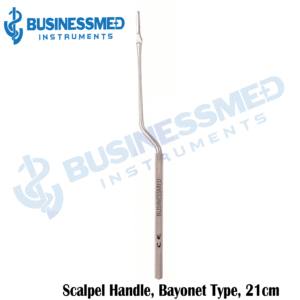
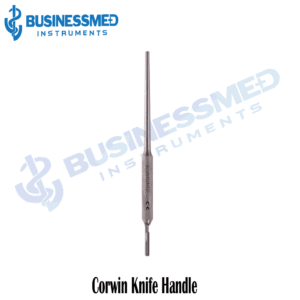
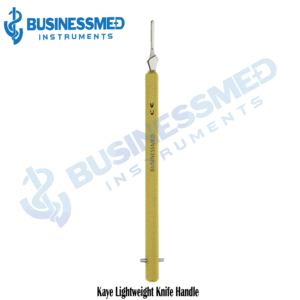
The handle number names the blade fitting: No. 3 (and #3 long, #7) takes the small 10-series blades; No. 4 takes the large 20-series blades. The knife handle #3 comes standard, long and long angled; the #7 handle is long, thin and pen-like. Round handles roll between the fingertips to change the blade angle during an incision; precision, Kaye, Corwin and Barron handles, a bayonet handle and No. 10 blades complete the group.
How to choose a septum knife or handle
- Task in the nose. Mucosal incision and submucous plane → Freer; cartilage trimming → Joseph, Cottle; septal cartilage excision → Ballenger swivel; graft slitting → Masing, Maltz.
- Blade fitting. Small 10-series blades on No. 3 and #7 handles; large 20-series blades on No. 4.
- Reach and grip. Long and angled handles keep the line of sight in deep fields; round handles give rotational control.
What are nasal knives and handles used for?
Septoplasty and submucous resection, rhinoplasty incisions and cartilage trimming, cartilage graft shaping, endoscopic sinus surgery, microlaryngeal surgery and skin incisions.
How BusinessMed knives are made
German stainless steel with a satin, non-reflective finish; lightweight aluminum on the Kaye handle. Reusable and autoclavable, 5-year warranty; the No. 10 blade is single-use.