Types of conventional laryngoscope blades and handles
LED blades
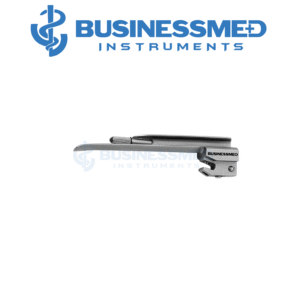
The LED conventional laryngoscope blade and the straight LED Miller blade — the Miller passes beneath the epiglottis and is commonly used in infants.
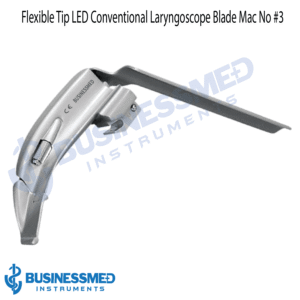
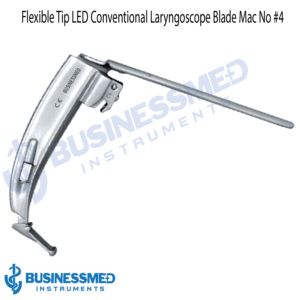
Flexible tip (McCoy-type) blades
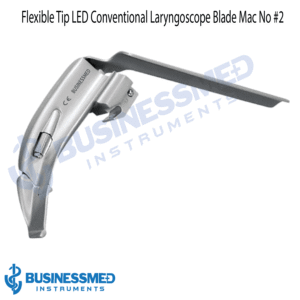
A lever raises the hinged tip, for difficult laryngoscopy: the flexible tip LED blade Mac #3, with Mac #2 and Mac #4.
Hook-on handles
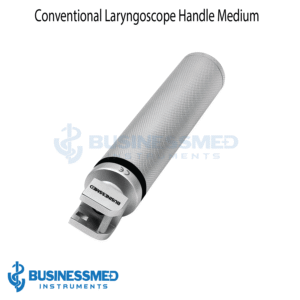
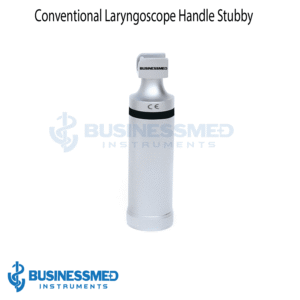
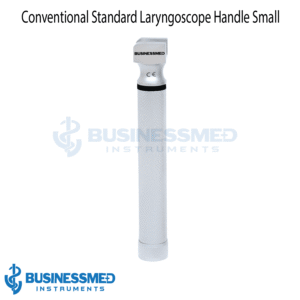
The handle holds the batteries and powers the blade through the hinge: medium, small and stubby, the short option where a long handle meets the chest wall.
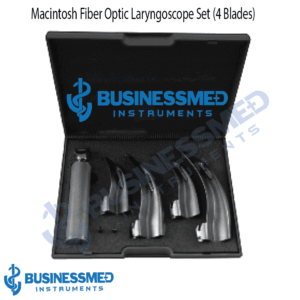
Blade set
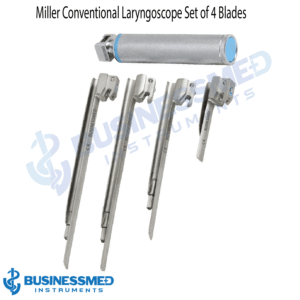
The Miller conventional set of 4 blades.
How to choose a rigid laryngoscope
- Stay in one system. Conventional blades carry their own lamp and work on conventional hook-on handles; fiber optic blades need a green-system handle. The two do not light each other.
- Blade shape. Macintosh curved; Miller straight; McCoy-type for difficult laryngoscopy.
- Handle length. A stubby handle laryngoscope suits obese or pregnant patients.
What is a conventional laryngoscope used for?
Direct laryngoscopy and tracheal intubation — a direct rigid laryngoscope gives a line-of-sight view of the larynx so the tube can be placed under direct vision, in anesthesia and emergency airway work. The Miller laryngoscope blade is the common choice for infants.
How BusinessMed conventional laryngoscopes are made
Stainless steel blades with LED lamps; chrome-plated brass handles, as stated on each page. Reusable, autoclavable and covered by a 5-year warranty.