Types of rasps and saws
Nasal rasps
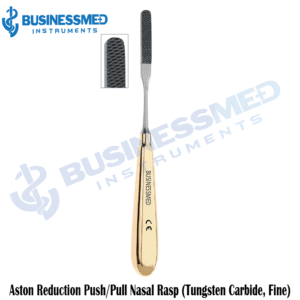
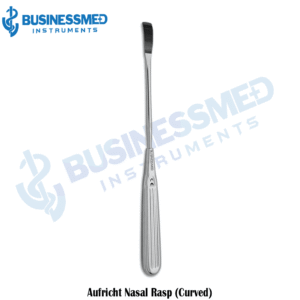
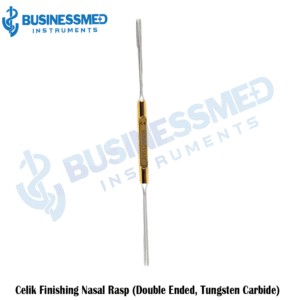
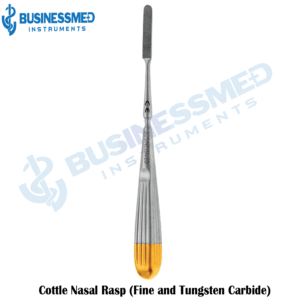
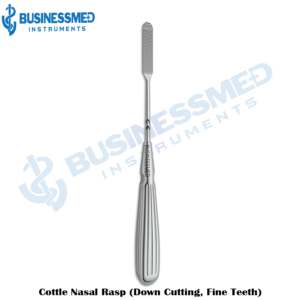
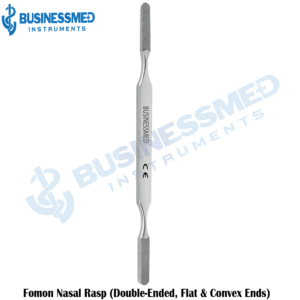
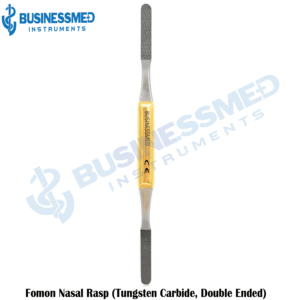
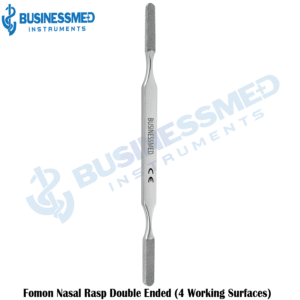
Fomon, Maltz, Cottle, Parkes, McCullough, Aston, Lewis, Livie, Reidy and Aufricht patterns, single- or double-ended. Tooth direction sets the working stroke: forward-cutting teeth cut on the push, reverse (down-cutting) teeth on the pull, and push-pull teeth in both directions — as on the Obwegeser push-pull rasp. Tungsten carbide inserts are harder than the stainless body, as on the Fomon tungsten carbide rasp.
Diamond finishing rasps
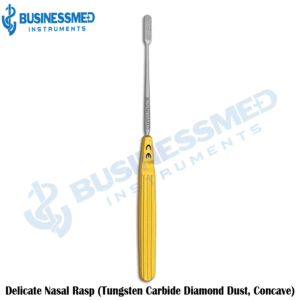
Diamond-coated faces abrade rather than cut and are sold as finishing rasps — the Peet diamond rasps and the delicate tungsten carbide and diamond dust rasp.
Glabella rasps
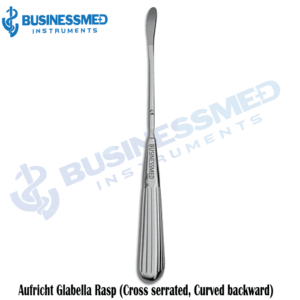
Glabella rasps work at the nasal root and nasofrontal angle: the Aufricht glabella rasp, the Webster push-pull glabella rasp and the Rubin glabella button rasp, which ends in a button with down-cutting teeth.
Preservation rhinoplasty rasps and saws
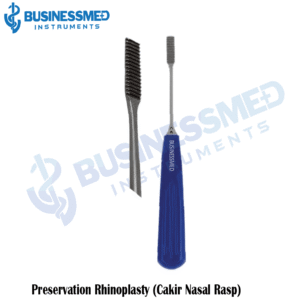
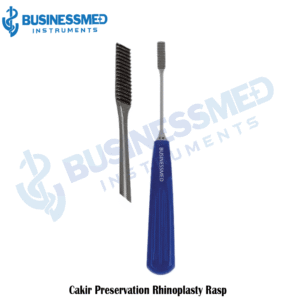
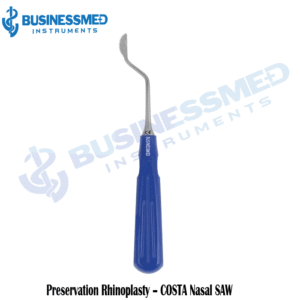
Preservation rhinoplasty keeps the dorsum, its ligaments and the cartilage framework where possible, so bone work is limited to small areas. The Tastan-Cakir saws were developed for it — the concave radix saw for radix osteotomies, the convex saw for transverse osteotomies, lateral and medial saws — with the COSTA saw and the Cakir and Tastan rasps.
Nasal bone saws
The Joseph nasal saw is a one-piece instrument with a long thin serrated blade; sawing is a published technique for lateral osteotomy. See the Joseph nasal saw, delicate straight and bayonet versions.
Raspatories and other rasps
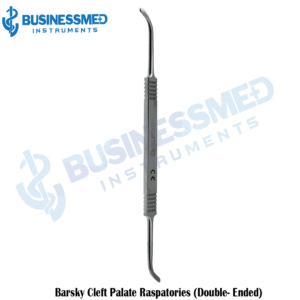
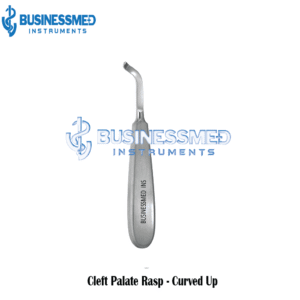
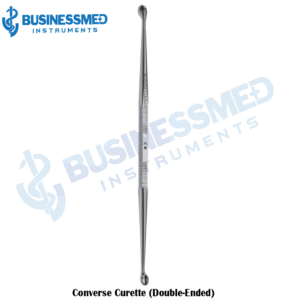
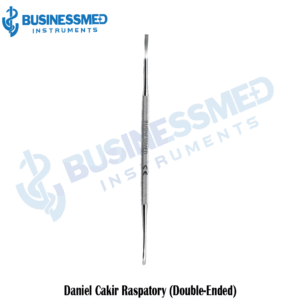
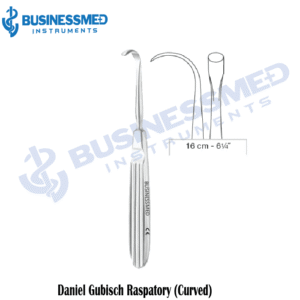
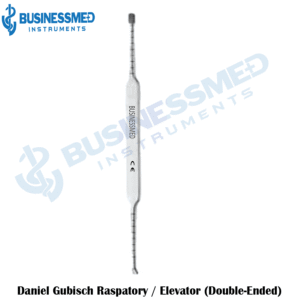
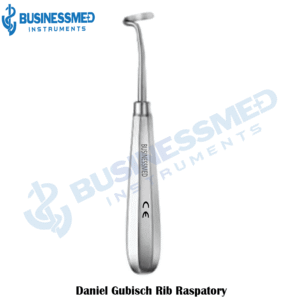
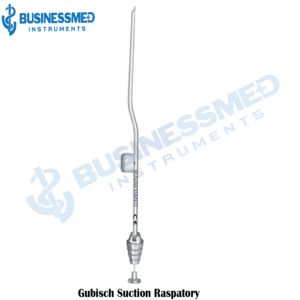
Daniel-Gubisch rib raspatories lift the perichondrium around rib cartilage harvested for rhinoplasty. The range also holds Barsky and cleft palate raspatories for palatoplasty, the Kistler anthelix rasp for otoplasty, the Kleinert-Kutz orthopedic bone rasp, Watson-Williams and Wiener antrum rasps, and the Converse curette that clears bone particles after rasping.
How to choose a nasal rasp
- Stroke. Forward, reverse or push-pull teeth — choose by the stroke you work with.
- Cutting or finishing. Tungsten carbide teeth cut; diamond surfaces abrade for the final finish.
- Site. Dorsum rasps for the bony hump, glabella rasps for the root, antrum rasps for the maxillary sinus opening.
- Rasp or saw. A surgical rasp smooths a surface; a saw divides bone along a line. A bone rasp or a bone file finishes; the osteotome is the other way to make the cut.
Each rasp instrument page lists its length, teeth and ends.
What are rasps and saws used for?
Smoothing the bony dorsum after hump resection, nasal root contouring, saw osteotomies in standard and preservation rhinoplasty, rib cartilage harvest, cleft palate repair, otoplasty and maxillary antrostomy.
How BusinessMed rasps and saws are made
German stainless steel, satin non-reflective finish; tungsten carbide inserts and diamond surfaces where the product name says so. Reusable, autoclavable, 5-year warranty.