Types of orthodontic scissors
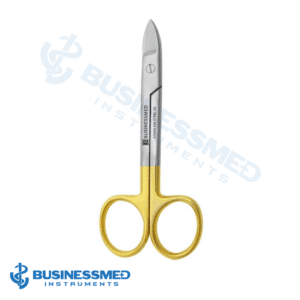
Crown and collar scissors
Two pivoted short, robust blades with finger and thumb rings cut metal bands by shearing. The crown scissors trim stainless steel and temporary crown margins; as crown cutting scissors they also cut metal bands, dental dam material and retraction cord.
Festooning scissors
Festooning scissors trim and contour the margins of preformed stainless steel, aluminum and polycarbonate crowns into the scalloped line of the gum: the 3-inch sharp-edge and smooth-edge patterns, and the heavy curved festooning scissors for thicker metal.
Wire cutting scissors
The 45° angled wire cutting scissors cut soft stainless steel ligature ties and fine, soft wire; the angle reaches behind the bracket. Hard archwire belongs to Orthodontic Wire Cutters.
How to choose orthodontic scissors
- Material. Bands and crown margins → crown or festooning scissors; soft ligature wire → wire cutting scissors; archwire → a cutter, not scissors.
- Crown type. Heavy curved festooning scissors give leverage on thicker stainless steel crowns; the 3-inch patterns suit pediatric and temporary crowns.
- Edge. Sharp and smooth-edge festooning scissors are both offered; the product pages describe each.
What are crown scissors dental teams use for?
Fitting preformed stainless steel, aluminum and polycarbonate crowns in pediatric and restorative dentistry; cutting metal bands, dental dam material and retraction cord; and trimming soft ligature ties on orthodontic appliances.
How BusinessMed orthodontic scissors are made
German stainless steel with a satin, non-reflective finish; reusable, autoclavable and covered by a 5-year warranty.