Types of dental mirrors and handles
Cone socket mirror heads
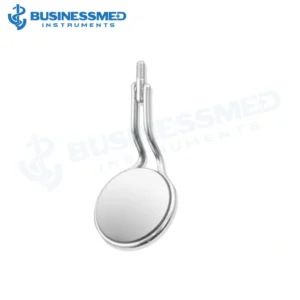
A cone socket head has a tapered stem with a ledge before the thread; the ledge seats in the conical opening of the handle. Choose the No. 3 cone socket mirror or the No. 4 cone socket mirror; the curved socket mirror carries the same cone socket on a curved neck.
Simple stem mirror heads
Simple stem heads, the European style, screw straight into the handle with no ledge, as on the No. 4 simple stem mirror and the simple stem front mirror. "Front" means a front surface mirror: the reflective coating sits on top of the glass, so the mirror gives one sharp image without the faint double image of a rear-coated mirror.
Mirror handles
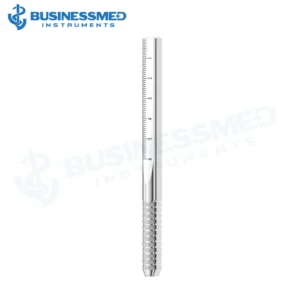
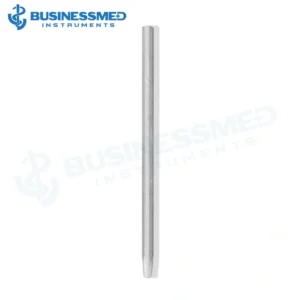
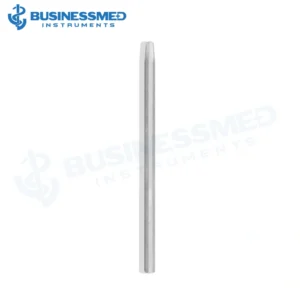
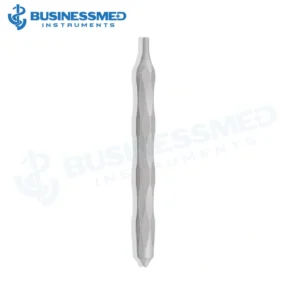
The handle holds the head and stays in service while worn heads are replaced. Cone socket handles come plain, knurled (EFM mirror handle), red, and with a measuring scale for chairside reference measurements; simple stem handles come plain or as the simple stem mirror handle.
How to choose a mouth mirror
- Match the thread system first. Cone socket and simple stem threads do not interchange, so a mouth mirror head fits only a handle of its own system. Check the handles already in the practice before ordering heads.
- Head size. Mirror numbers follow face diameter in 2 mm steps: No. 3 is 20 mm, No. 4 is 22 mm and No. 5 is 24 mm. A smaller face turns more easily in posterior and pediatric areas; a larger face shows more of the arch.
- Handle grip. A knurled or colored mirror handle is easier to tell apart on the tray; a scaled handle adds a millimeter reference.
- Replace heads, keep handles. Heads scratch and are replaced as a routine part of practice; a mirror dental handle lasts through many heads.
What are dental mirrors used for?
Dental mirrors are used in every oral examination and in most chairside procedures: to see distal, lingual and palatal surfaces by indirect vision, to direct light into the field, and to retract the cheek, lips or tongue while the other hand works. A dental mirror is on every examination tray.
How BusinessMed dental mirrors are made
Heads and handles are made of German stainless steel and are reusable and autoclavable, with a 5-year warranty.