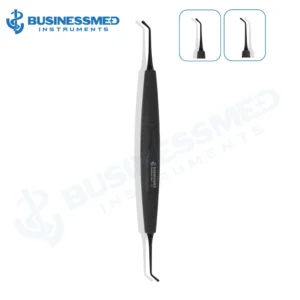
Types of composite instruments
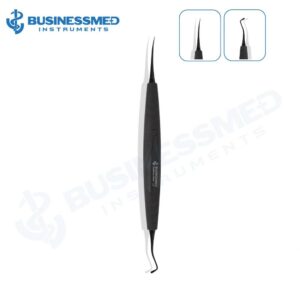
- Beavertail spatula — a composite placement instrument that carries increments into Class II, III and IV cavities and shapes facial and occlusal surfaces.
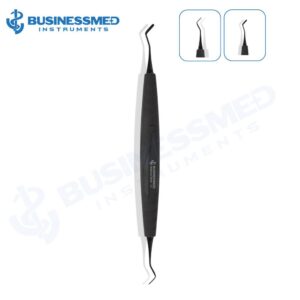
- Rounded composite plugger — condenses increments into Class I and II cavities and against the matrix band, pressing composite to the walls and margins.
- Fissure former — models the fissure pattern of molars and premolars in Class I and II fillings and refines grooves and cusp slopes.
- Compo Smooth finishing instrument — adapts, contours and smooths composite in anterior and posterior restorations before curing.
How to choose a dental composite instrument
- By step. Placing → beavertail spatula; condensing → plugger; anatomy → fissure former; smoothing → Compo Smooth.
- Anterior or posterior. The beavertail shapes facial surfaces of Class III and IV restorations; plugger and fissure former work Class I and II.
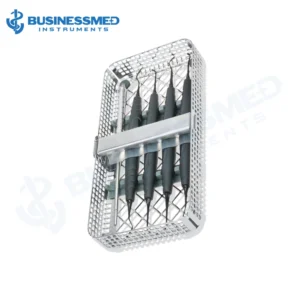
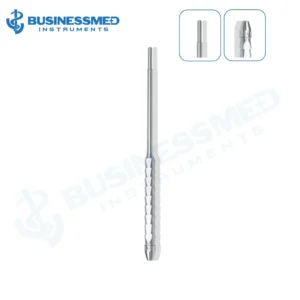
- Handle. Three patterns sit on the Bionik handle.
What are dental composite instruments used for?
Direct composite restorations, anterior and posterior: carrying increments, condensing them against cavity walls and the matrix band, shaping occlusal anatomy and facial contours, and smoothing the surface before light curing. Matrix retainers for Class II work are in Tofflemire Matrix Bands and Retainers.
How BusinessMed composite instruments are made
German stainless steel, three patterns on the Bionik handle; reusable, autoclavable and covered by a 5-year warranty.