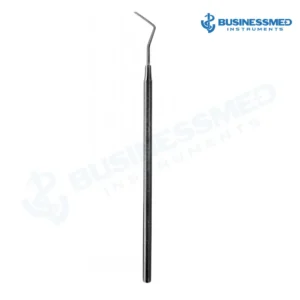
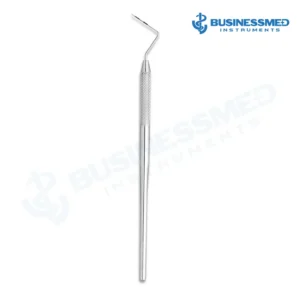
Types of periodontal probes
Williams scale probes
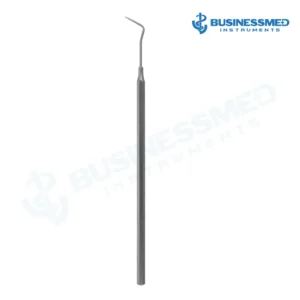
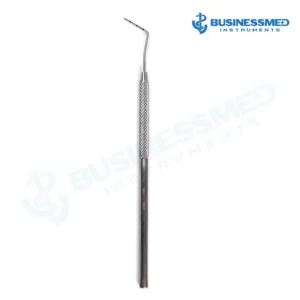
Marked 1-2-3-5-7-8-9-10, with the 4 and 6 mm lines left out so the bands are easier to read: the Williams periodontal probe and the single-ended Merritt probe on the same scale.
Michigan O probes
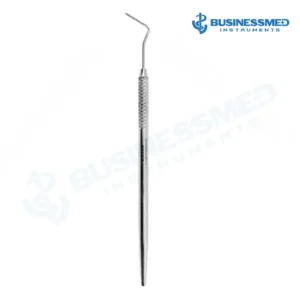
A thin round tip marked 3-6-8: the Michigan O probe, and the Michigan O Williams with Williams markings to 10.
Goldman-Fox probe
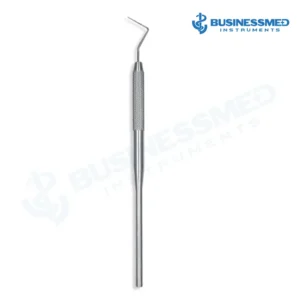
The Goldman-Fox probe has a flat tip with the Williams scale.
How to choose a perio probe
- Markings. Choose the scale the practice charts with; Williams and Merritt share one, the Michigan O reads at 3, 6 and 8.
- Tip. Thin round (Michigan O) or flat (Goldman-Fox).
- Single probe or expro. For a probe on one end and an explorer on the other — Williams, CP and UNC scales — see Dental Explorers and Expros; a titanium-coated UNC probe is in Titanium-Coated Scalers and Curettes.
What is a dental probe used for?
Periodontal charting: measuring sulcus and pocket depth at each site, reading clinical attachment loss and recession, and noting bleeding on probing — the periodontal assessment that dental periodontal probes are made for.
How BusinessMed periodontal probes are made
German stainless steel with a satin, non-reflective finish; reusable, autoclavable and covered by a 5-year warranty.