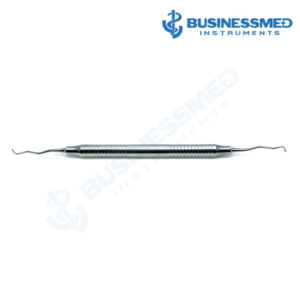
Types of Gracey curettes
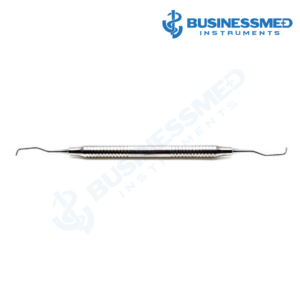
Standard Gracey curettes
Numbered by area — gracey 11 12 for mesial and 13/14 for distal surfaces of posterior teeth, with 15/16 and 17/18 modifications. Ours come on a hollow octagonal handle or a hollow round handle; hollow handles are lighter than solid ones of the same diameter.
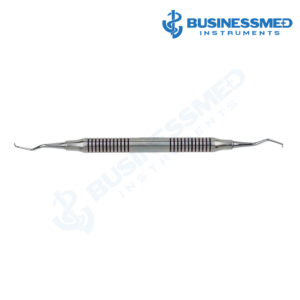
Extended shank (long)
The long Gracey curettes have a terminal shank 3 mm longer, for pockets of 5 mm or more.
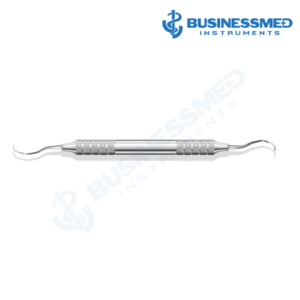
Mini Gracey curettes
The mini Gracey curettes have a blade about half the length and thinner, for narrow pockets, furcations and tight interproximal areas where a full-size blade cannot adapt to the root.
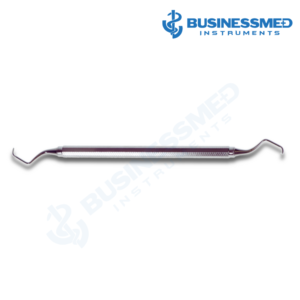
Mesial-distal
The mesial-distal Gracey curettes are made for the mesial and distal surfaces of premolars and molars.
How to choose a Gracey scaler
- Number by surface. Each Gracey cuts only the surfaces its number is made for; 11/12 and 13/14 cover posterior mesial and distal surfaces.
- Pocket depth. Extended shank for pockets of 5 mm or more; mini blades for narrow pockets and furcations.
- Handle. Octagonal or round hollow handles; both lighter than solid.
- Gracey or universal. For one curette that works on all surfaces with both edges, see Universal Dental Curettes.
What are Gracey instruments used for?
Subgingival calculus removal and root planing on the tooth surfaces each Gracey number is shaped for, in periodontal therapy and maintenance, including deep pockets, root concavities and furcations.
How BusinessMed Gracey curettes are made
German stainless steel with a satin, non-reflective finish on hollow handles; reusable, autoclavable and covered by a 5-year warranty.