Types of surgical chisels
Nasal bone chisels
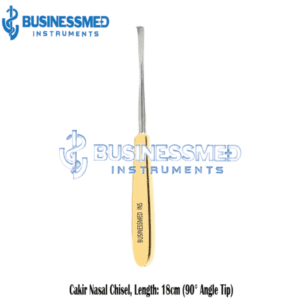
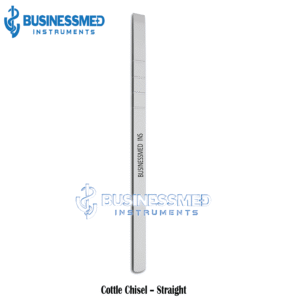
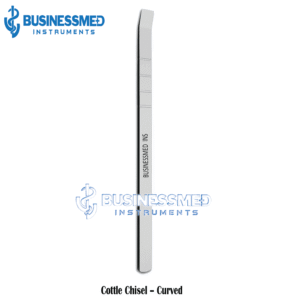
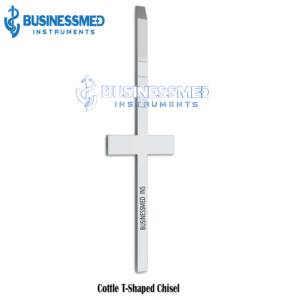
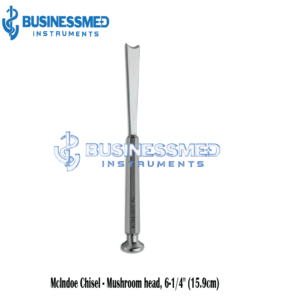
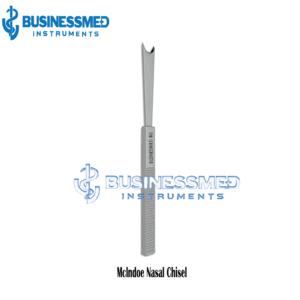
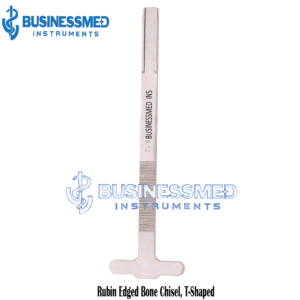
Straight, curved and angled chisels that cut and shape nasal bone in rhinoplasty. The Cottle chisel carries depth graduations that show how far the edge has advanced; the Rubin T-shaped chisel has an integral cross handle; the McIndoe mushroom-head chisel contours the nasal hump.
Septum chisels
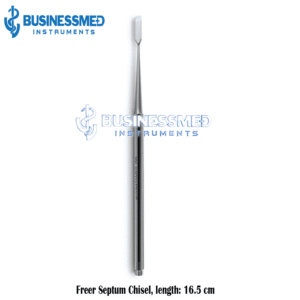
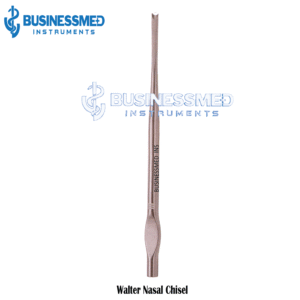
The Freer septum chisel and the V-edged Hajek-Ballenger chisel trim the bony septum in septoplasty and submucous resection, where deviated bone, spurs and the maxillary crest are removed after the flaps are raised.
Radix and lacrimal chisels
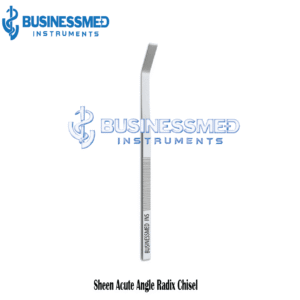
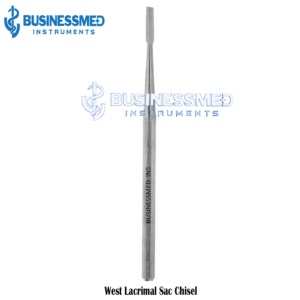
The Sheen acute angle radix chisel works at the nasal root. The West lacrimal sac chisel is made for the bony step of dacryocystorhinostomy (DCR), which removes the thin lacrimal bone next to the lacrimal sac.
Flat bone chisel and hand drill
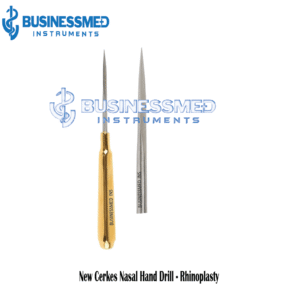
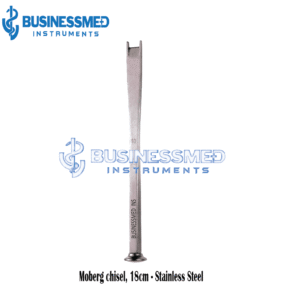
The Moberg chisel is a flat bone chisel for bone cutting and contouring. The Cerkes nasal hand drill makes fine holes in the nasal bones for sutures and small bone adjustments.
How to choose a bone chisel
- Site first. Nasal bone, bony septum, nasal root and lacrimal bone each have their own patterns above; the procedure decides the group.
- Shape of the shank. Straight chisels cut along the line of sight; curved and angled chisels reach around the nasal contour.
- Handle. A flat-ended or mushroom head takes a bone mallet; the Rubin T-handle gives a hand grip on the same chisel.
- Depth control. Graduated Cottle chisels show the cutting depth on the shank.
A chisel cuts on one face; an osteotome is beveled on both sides. Rhinoplasty osteotomes are in Osteotomes, and mallets in Surgical Mallets & Cartilage Instruments.
What are surgical chisels used for?
Shaping nasal bone and the nasal hump in rhinoplasty, trimming the bony septum in septoplasty and submucous resection, working at the radix, and the bony step of dacryocystorhinostomy.
How BusinessMed surgical chisels are made
German stainless steel, satin non-reflective finish; reusable, autoclavable and covered by a 5-year warranty.