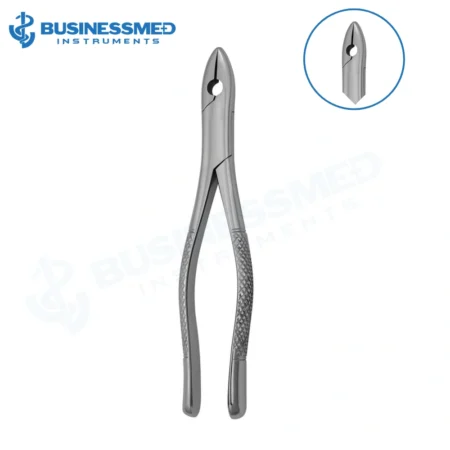
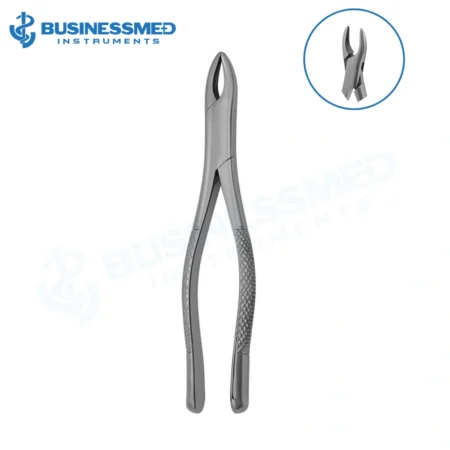
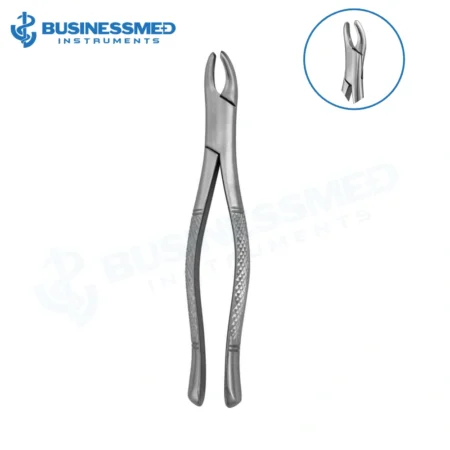
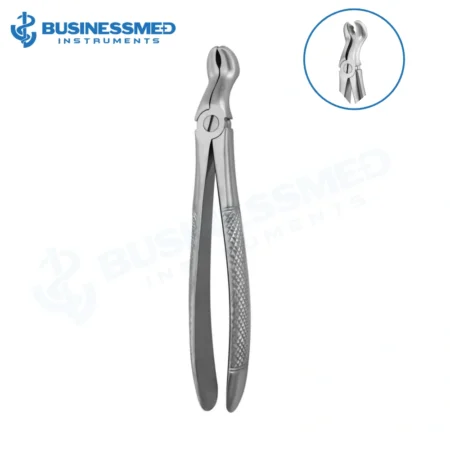
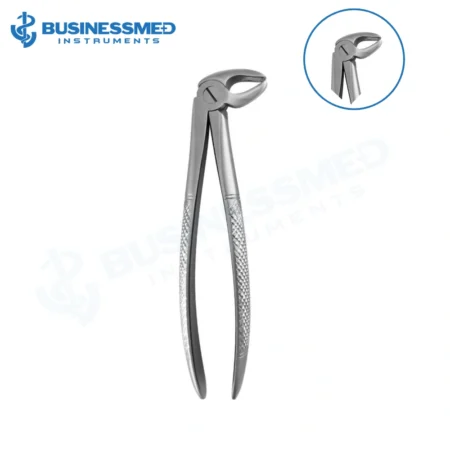
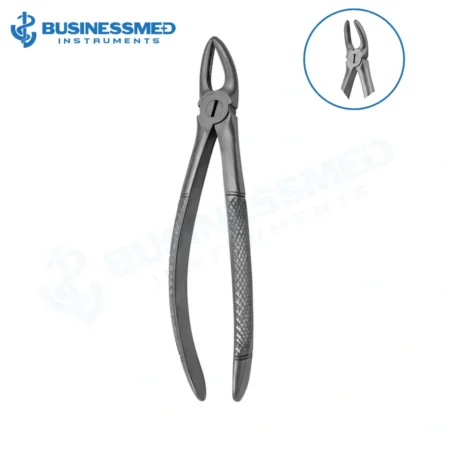
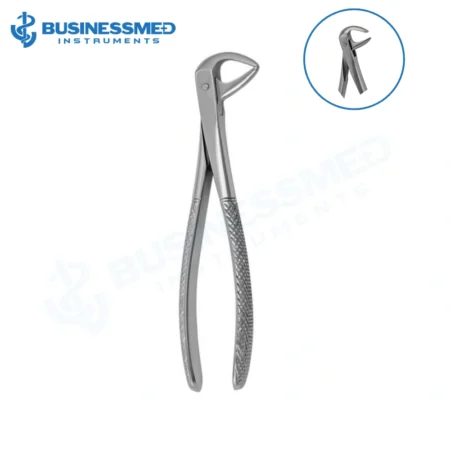
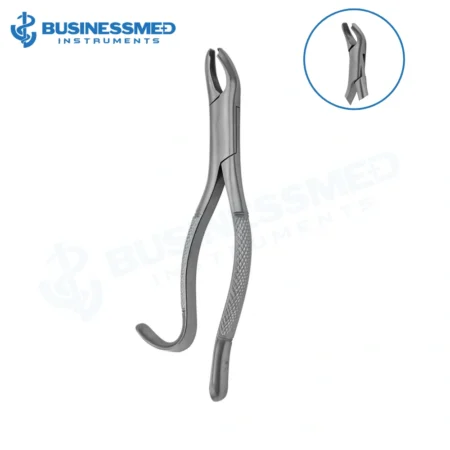
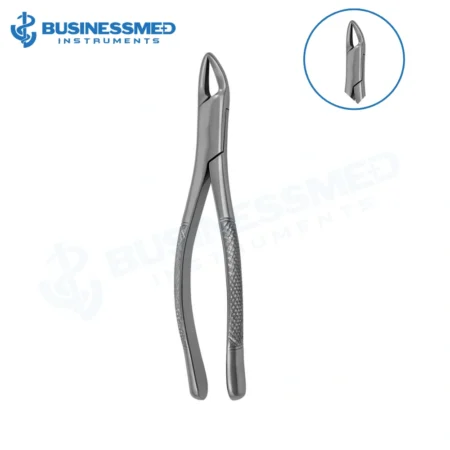
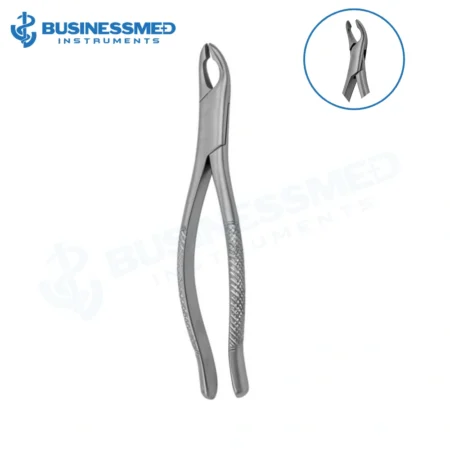
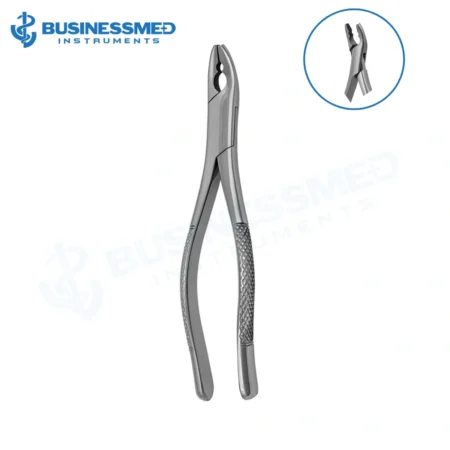
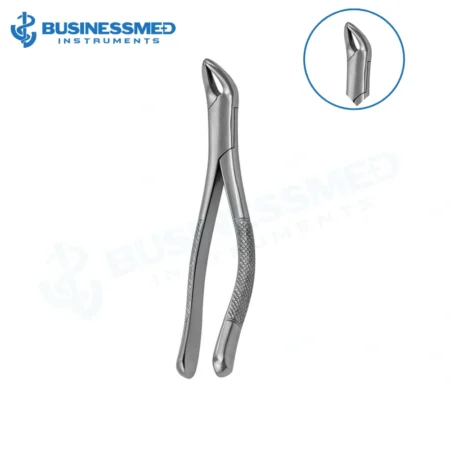
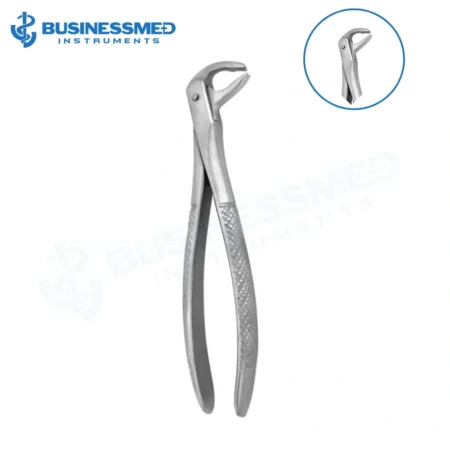
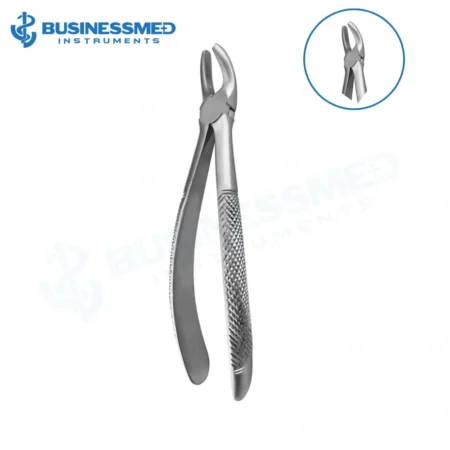
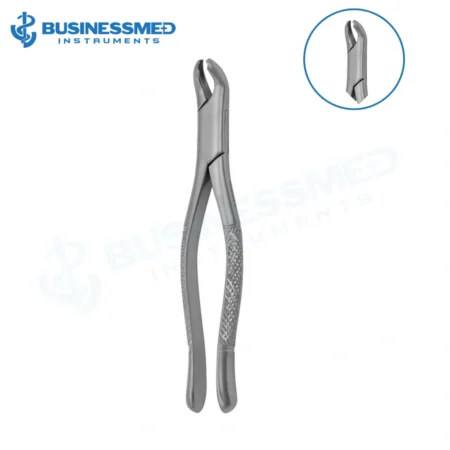
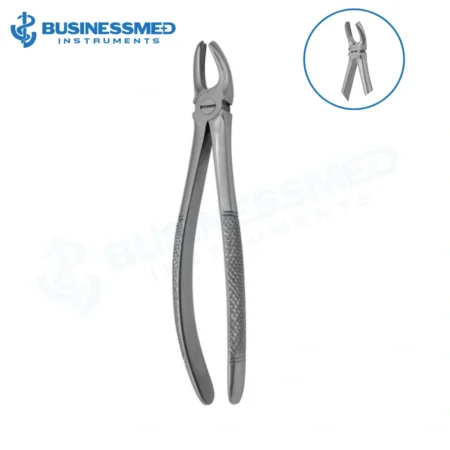
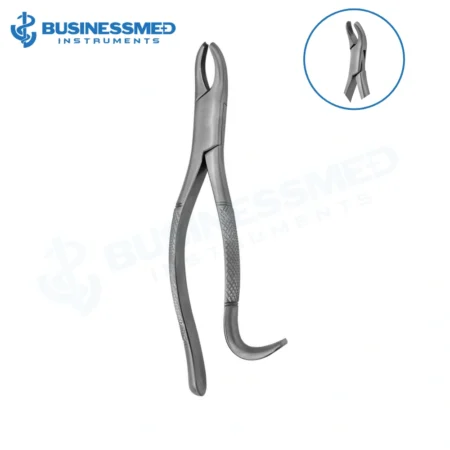
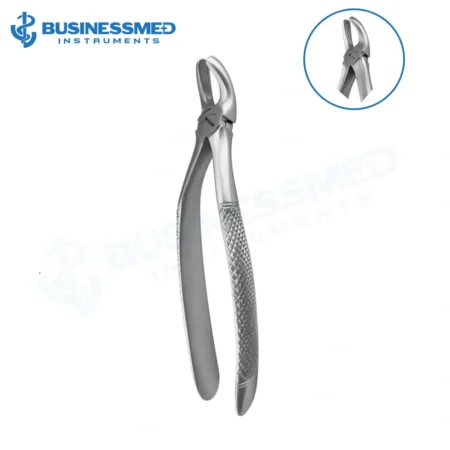
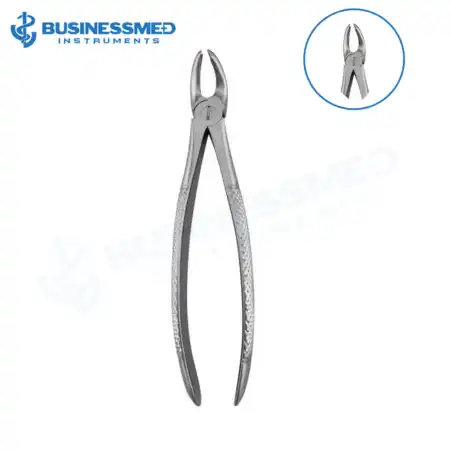
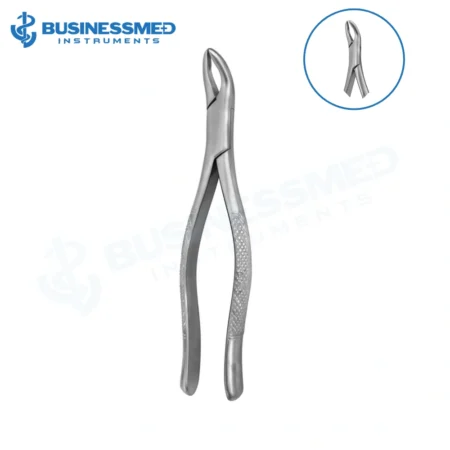
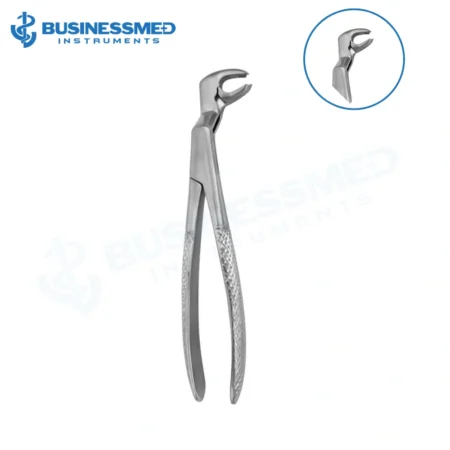
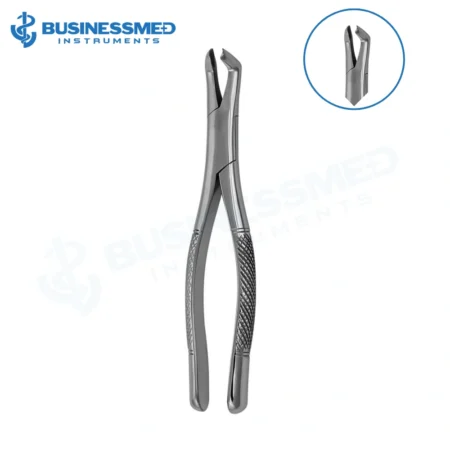
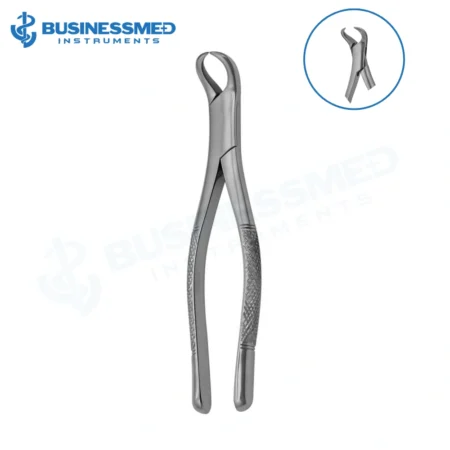
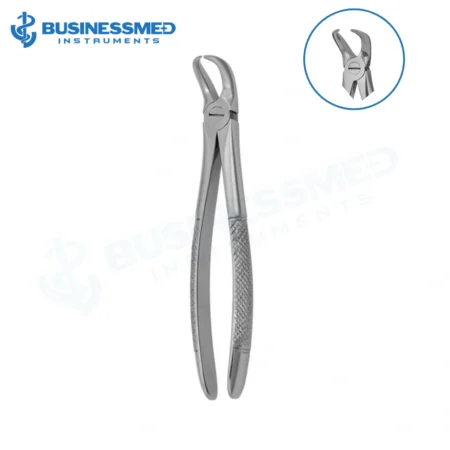
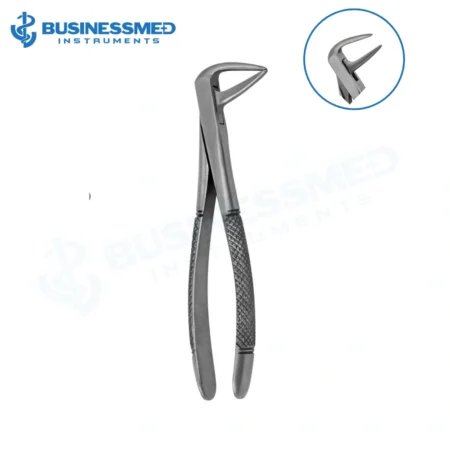
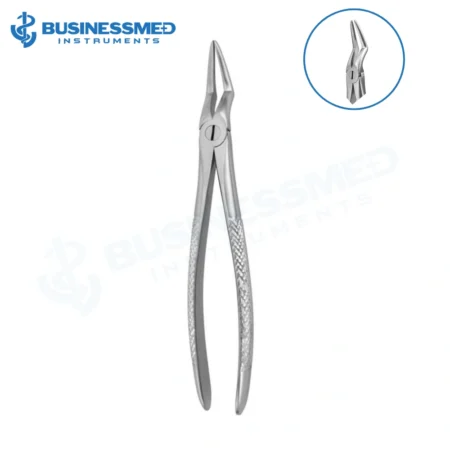
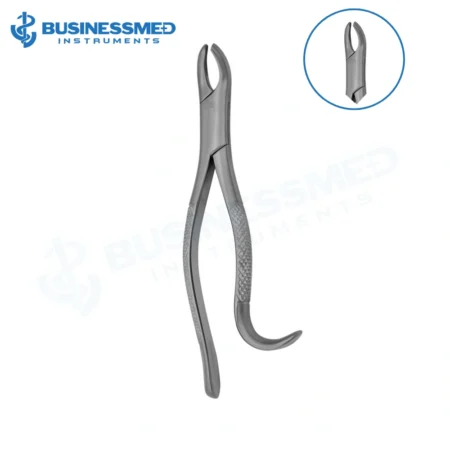
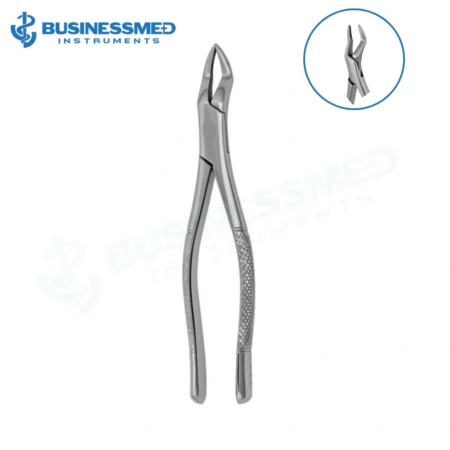
Types of extraction forceps
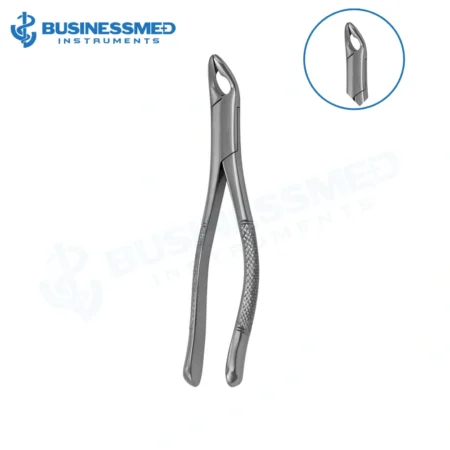
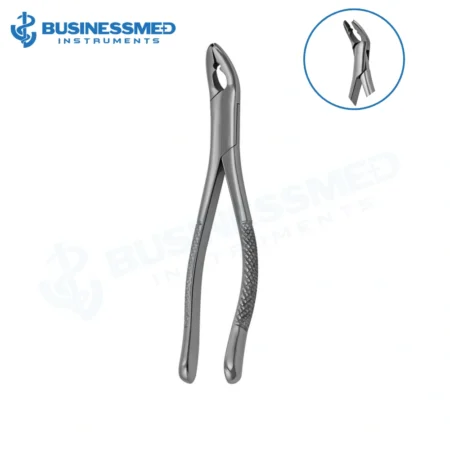
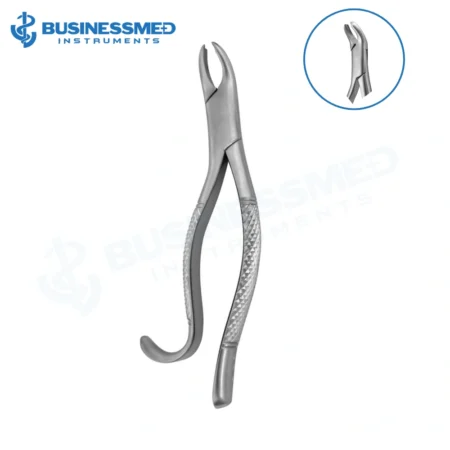
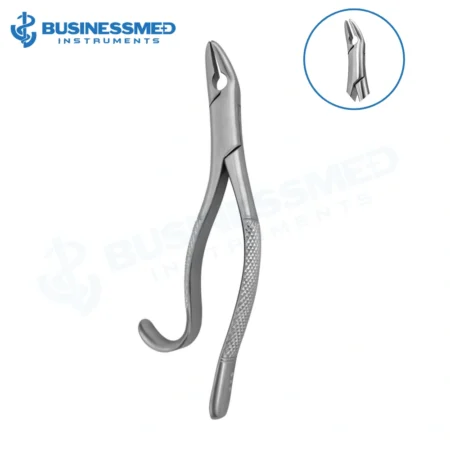
American pattern
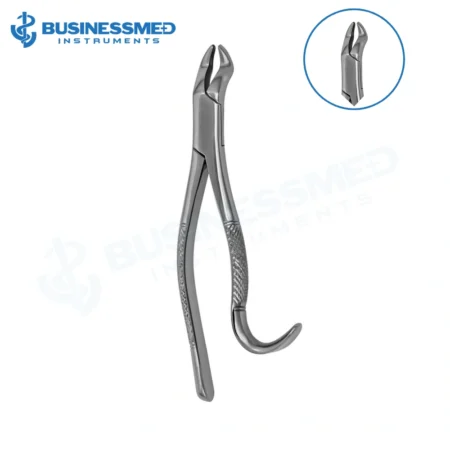
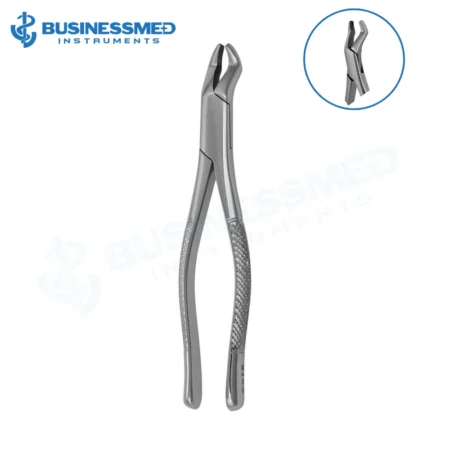
A smooth hinge with no visible pin. The universal 150 takes upper incisors, canines, premolars and roots and the 151 the lower ones, with A (anatomical or parallel beak) and AS versions; the 210S and 210H, 17, 24, 203, 222 and 286–288 cover further tooth groups. Suffixes: S = serrated beaks, H = thumb-hook handle, L = left.
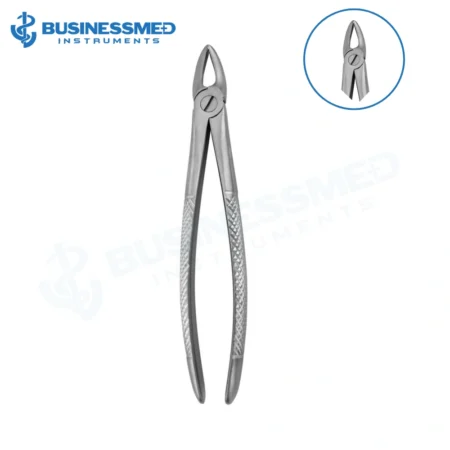
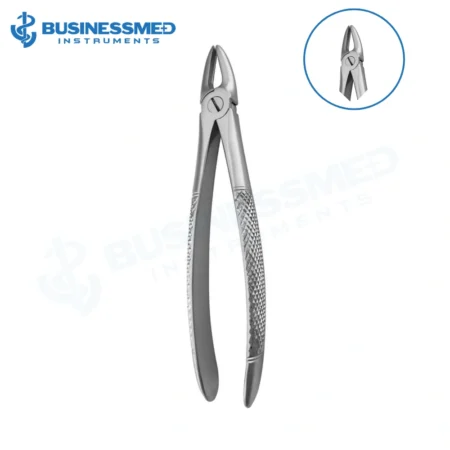
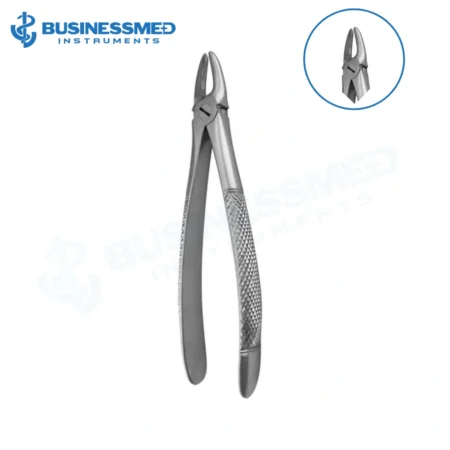
English pattern
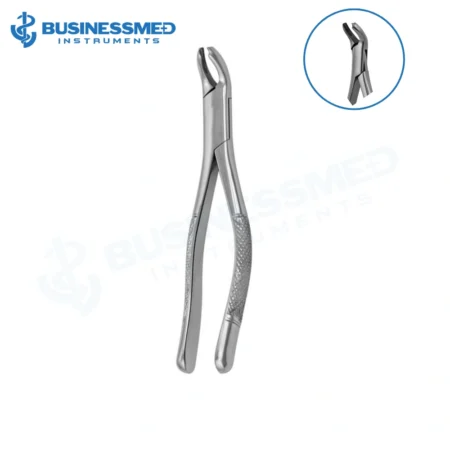
A visible hinge pin set close to the working end, which moves the fulcrum toward the beaks. Figures follow a chart: 13 lower premolars, 17 / 18 upper molars right / left, 19 upper and 20 lower third molars, 121 upper wisdom teeth, 169 lower canines and premolars, 22 1/2L and R for lower molars, and the 137 Klein children's pattern for upper incisors.
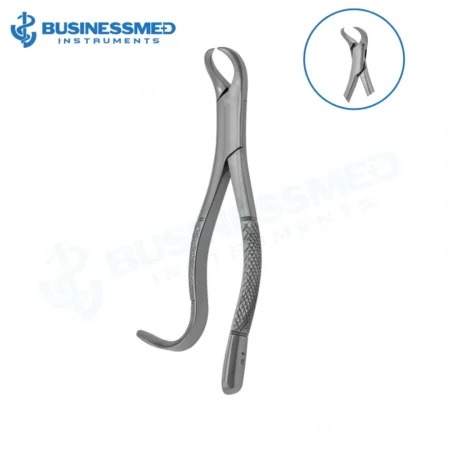
Lower molar and cowhorn forceps
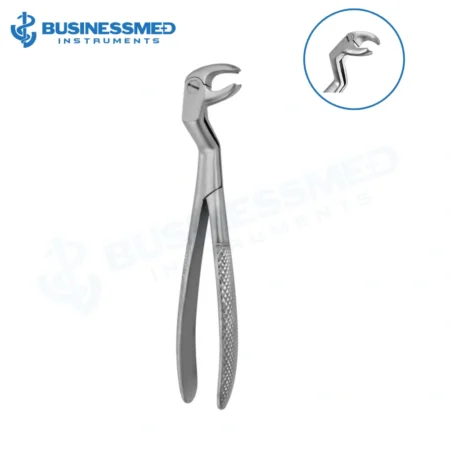
Lower molar patterns engage the furcation of two-rooted molars with pointed or tri-point beaks: the 16 universal cowhorn, the 23 cowhorn, the English 23 horn-beak, 15, 217 and 287. Sided upper molar forceps such as the 18L have a pointed buccal beak for the furcation between the two buccal roots.
Root forceps
Long, narrow, often serrated beaks that pass down the socket wall to a root with no crown to grip: the American 300 and 301, and the English 29, 29N (narrow), 30, 31, 33 and 33A.
How to choose dental extraction forceps
- Tooth group first. The figure number names the teeth; check the arch (upper or lower) and region on each page.
- Universal or sided. Universal forceps work the left and right sides of one arch; sided figures (17 / 18, 18L, 22 1/2L / R) are made for one side.
- American or English pattern. Both cover the same tooth groups; the English hinge pin sits closer to the beaks, moving the fulcrum toward them.
- Beak. Serrated (S) beaks grip; cowhorn and pointed beaks engage the furcation; root forceps reach a root with no crown.
- Children. The Klein 137 is a children's pattern.
What are extraction forceps in dentistry used for?
Tooth extraction in oral surgery and general dentistry — anterior teeth, premolars, molars and third molars of both arches — and removal of retained roots. Root tips and small fragments are handled with endodontic root forceps; tooth extraction forceps are for whole teeth and roots.
How BusinessMed extraction forceps are made
Our forceps for extractions are German stainless steel with a satin, non-reflective finish; reusable, autoclavable and covered by a 5-year warranty.